
If you're asking is wuthering waves better than genshin in 2026, you're definitely not alone. It has turned into one of the biggest ongoing debates in the gacha RPG space, especially now that both games have had time to grow into much more complete versions of themselves. The rivalry between Kuro Games' Wuthering Waves and HoYoverse's Genshin Impact feels way closer than it did before, and the numbers back that up: in February 2026, Genshin Impact led mobile revenue with $54.3 million, while Wuthering Waves followed at $46 million. A year earlier, that gap would have looked almost unthinkable. There isn't a single objective winner here, but one of these games will absolutely feel better depending on whether you care more about combat, exploration, grind, or long-term value.
Wuthering Waves vs Genshin Quick Verdict
If combat is the main reason you log in, Wuthering Waves has the edge. Its parry timing, dodge counters, and swap-cancel flow give it a much more hands-on, execution-heavy feel than most mobile RPGs, and honestly, that's where it shines brightest. Genshin Impact still comes out ahead for players who want a broader exploration sandbox, more puzzle-heavy regions, and a lower-pressure combat loop that doesn't constantly ask for sharp inputs.
There's also a practical split depending on your setup. Players on older or weaker devices may lean toward Wuthering Waves, especially after the optimization improvements tied to version 3.1 and its updated performance pipeline. On the other hand, if you care more about wandering through a huge world, solving environmental puzzles, and taking things at your own pace, Genshin remains incredibly hard to beat.
| Category | Wuthering Waves | Genshin Impact |
|---|---|---|
| Combat Style | Action-forward, parry/dodge/swap | Elemental rotation, team swapping |
| Exploration | Vertical, fast traversal, fluid movement | Puzzle-dense, region variety, Zelda-inspired |
| Story | Tighter cast, sharper narrative arcs | Sprawling lore, Archon quest scale |
| Device Performance | Scales well on low-end hardware | Requires more device headroom |
| Gacha Rates | 0.8% / 80-pull hard pity | 0.6% / 90-pull hard pity |
| Endgame | Tower of Adversity, Tactical Holograms | Spiral Abyss, Imaginarium Theater |
Combat Differences: Wuthering Waves vs Genshin
Wuthering Waves Combat Feel
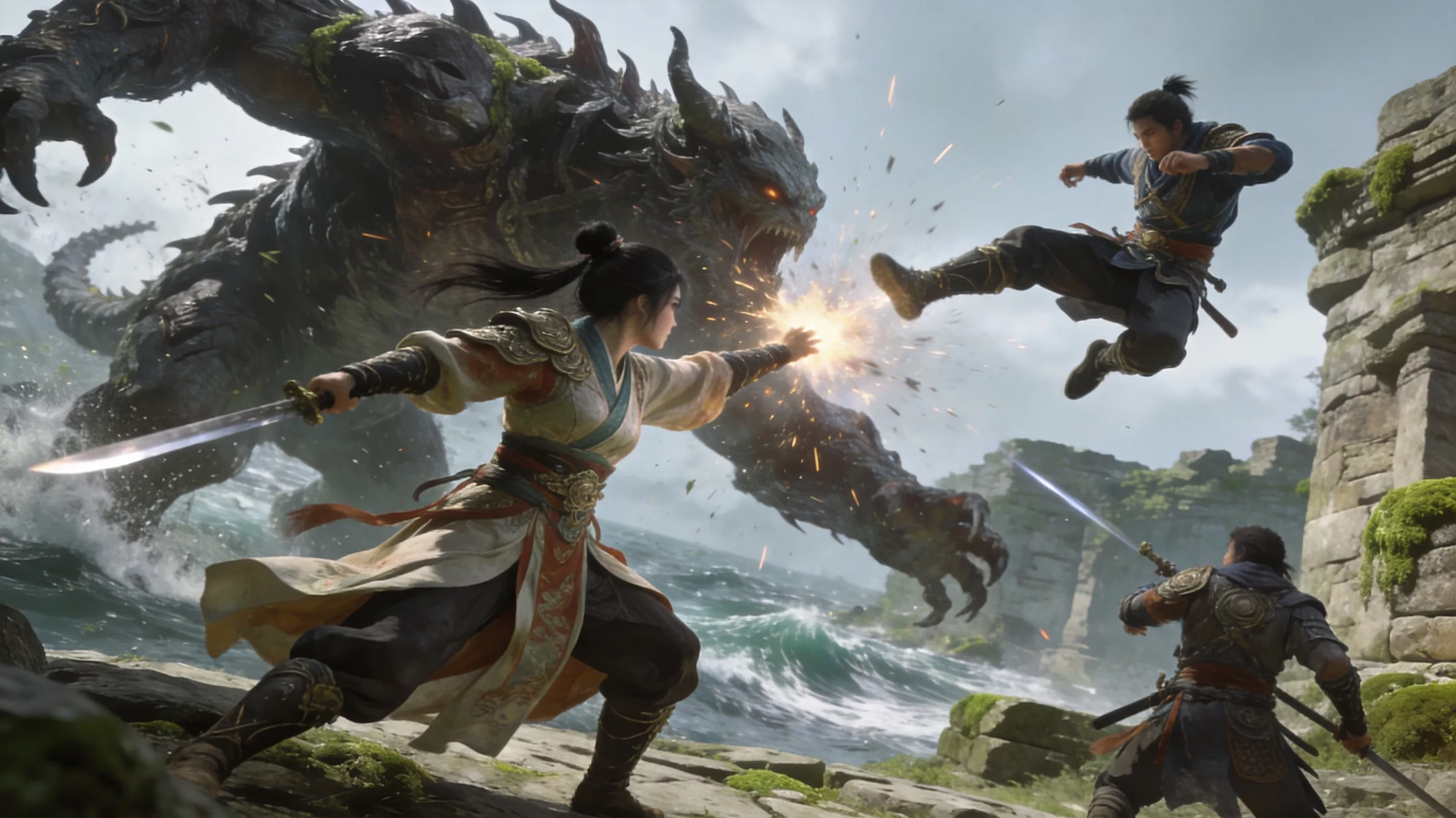
Wuthering Waves is built around reactive combat, and you feel that almost immediately. Parry windows push you to challenge enemy attacks directly instead of just backing off, and when you land them, the reward is huge: posture breaks that open bosses up for long damage windows. Perfect dodges add another layer by triggering that brief slow-motion effect, which makes pattern recognition matter a lot more than just brute-forcing fights with stats.
The swap system is a massive part of why combat feels so distinct. Intro and Outro skills turn team rotations into actual combo routing rather than simple cooldown management, with each character entering or leaving the field contributing buffs or setup value. It gives the whole combat loop a more choreographed feel, and when a rotation clicks, it feels seriously satisfying.
Then you have the Forte gauge, which is where character identity really starts to separate itself. Different Resonators spend Forte in completely different ways, whether that's for stance changes, burst windows, or utility effects, so even units sharing the same element can play nothing alike. Resonance Liberation works best when it's lined up with Forte usage and Concerto energy, which raises the skill ceiling quite a bit. In practice, a player with clean execution on mid-rarity units can absolutely outperform someone with a stacked roster but sloppy rotations, and that's a pretty meaningful design choice.
The Echo skill system pushes that even further. Your main Echo gives you an active monster ability you can weave into combat mid-rotation, and those choices matter more than they might seem at first glance. Some Echoes deliver burst damage, some offer crowd control, and others support the team directly. Because the Main Echo can heavily influence your build path, it ends up shaping Sonata planning in a way that artifact-only systems don't really replicate. On top of that, balancing Echo cost across the five-slot setup adds one more strategic layer.
Genshin Combat Loop
Genshin Impact takes a very different approach. It asks less from your hands moment to moment, but it rewards system knowledge in a big way through elemental reactions. Vaporize, Melt, Quicken, Bloom, Freeze, and the rest of the reaction web are basically the foundation of team building, and understanding how to layer those elements properly can lead to huge damage gains without needing frame-tight execution.
That makes Genshin much more comfortable for a wider range of players. You can pause, reset your thinking, and approach rotations with less pressure, which is a big reason why the game feels so approachable even years in. Instead of mechanical precision being the main expression of skill, Genshin puts more weight on comp construction, burst alignment, and reaction consistency.
A well-built team usually matters more than flashy inputs. If your roster is assembled correctly and your elemental sequencing is clean, you'll get strong results even without high mechanical intensity. That's great for theorycrafters and team-building fans, while also keeping the game friendly for casual players who prefer smoother clears over twitch-heavy combat. Spiral Abyss still asks for optimization, of course, but the execution pressure is nowhere near what Wuthering Waves demands in higher Tactical Hologram tiers.
Exploration, Story, and Daily Pacing
Wuthering Waves World Design
One area where Wuthering Waves deserves real credit is movement. Traversal just feels fast. Wall-running, grappling, and generous stamina design make vertical exploration much less annoying than it is in a lot of open-world games, and that changes the overall pacing in a good way.
The 3.0 and 3.1 updates helped a lot here too. Roya Frostlands, which covers more than 35 square kilometers, gave the game a much stronger sense of scale, and the expedition motorbike added a genuinely useful traversal tool that players can summon freely. Version 3.1 even expanded that vehicle so it can move across water. That's the kind of quality-of-life upgrade players actually notice, especially since it isn't locked behind pulls.
Wuthering Waves also benefits from having a smaller cast, sitting at roughly 40–50 Resonators in 2026. That tighter roster gives the writers more room to focus. Rover's amnesiac setup still anchors the main story, but side characters tied to regions like Rinascita and Roya Frostlands tend to get more concentrated arcs that connect directly to the world around them. The 3.1 questline, in particular, got a lot of praise from the community, and Emif's story arc landed strongly enough to help drive record banner revenue in Japan. The writing feels more deliberate than sprawling.
Genshin Exploration Appeal
Genshin's biggest advantage is still the sheer scale and density of Teyvat. By 2026, the game has five nations available — Mondstadt, Liyue, Inazuma, Sumeru, and Fontaine — and each one feels distinct not just visually, but in how it handles puzzles, environmental storytelling, and exploration flow. Wuthering Waves has improved a lot, but it still doesn't match Genshin on variety per region.
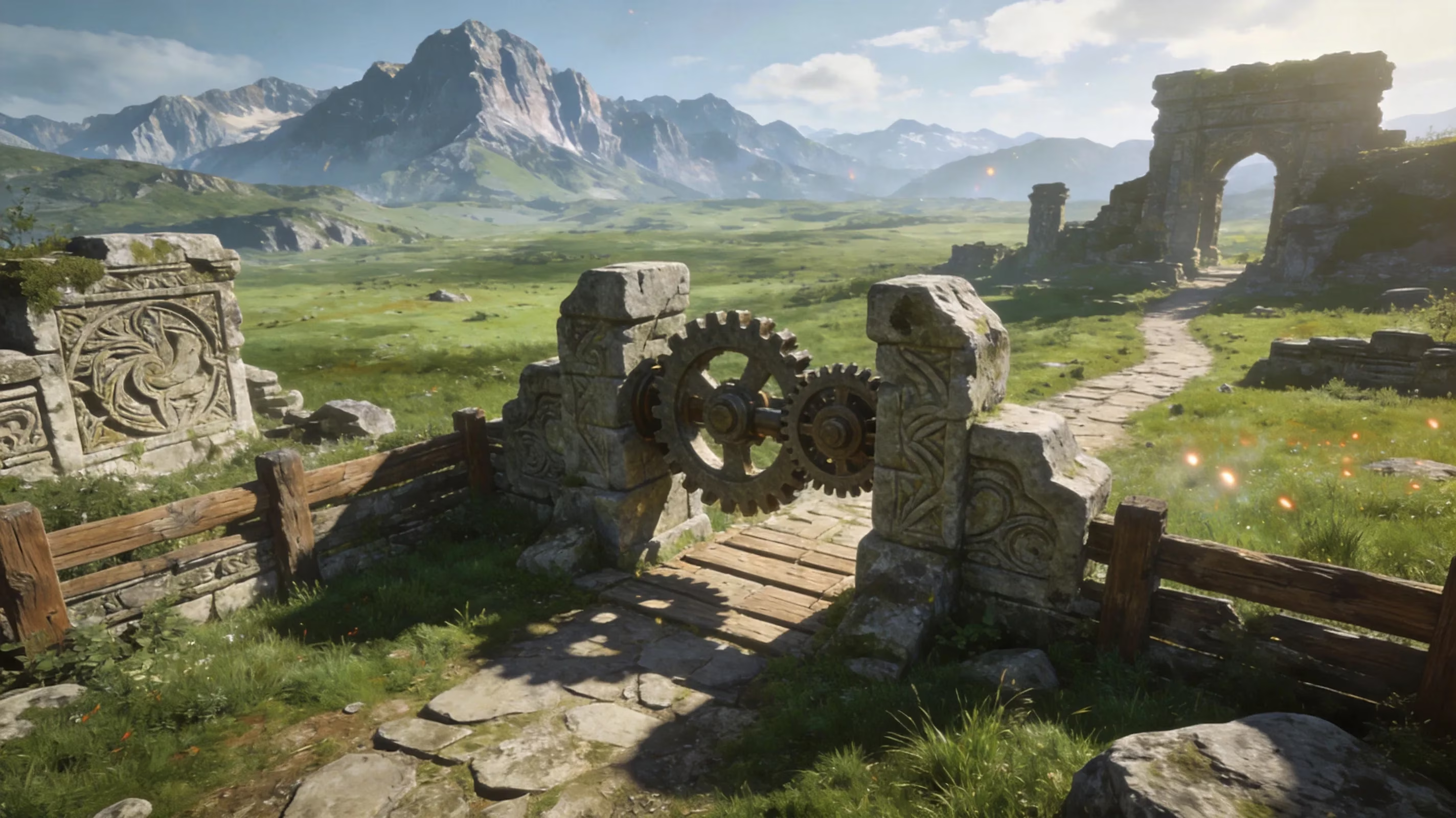
The world design clearly carries that Breath of the Wild influence, and it works. You wander into hidden caves, layered puzzle chains, and tucked-away objectives naturally, often without the game forcing you there through direct markers. There's also an absurd amount of lore packed into the world through books, item descriptions, NPC dialogue, and scattered collectibles. If you're the type of player who likes reading into everything, Genshin gives you way more to dig through.
Then there's the Archon quest structure, which still sits at the top of the genre in terms of scale. Each nation gets a flagship storyline that feels like a major event, and Fontaine especially earned a lot of praise for its emotional payoff. Beyond that, Genshin simply has more low-pressure side content: fishing, Serenitea Pot housing, decorating, seasonal minigames, and all the little systems that let you spend time in the world without worrying about hard combat. If your ideal gacha game doubles as a comfort game, Genshin is still the safer pick.
Gacha, Progression, and Endgame Value
On paper, the pity systems are close. In practice, the differences matter. Wuthering Waves has a 0.8% base 5-star rate, while Genshin sits at 0.6%, and hard pity arrives at 80 pulls instead of 90. Both games use a 50/50 structure on featured character banners, but Wuthering Waves pulls ahead on weapon value because its weapon banner gives a 100% guarantee for the targeted weapon. Genshin's epitomized path system is still less forgiving, since it can take multiple misses before your target becomes guaranteed.
The Echo RNG vs. artifact grind debate is a little messier. Genshin's artifact system is Resin-gated, so your daily farming is hard-capped by stamina. Wuthering Waves lets you farm Echoes in the overworld without spending stamina at all, which sounds amazing at first — and to be fair, it is a real advantage. The catch is that Echo progression stacks several layers of RNG at once: drop rate, main stat, substats, tuning outcomes, and Sonata alignment. So while you're freer to farm, chasing ideal pieces can still eat a huge amount of time.
Endgame is another area where the two games feel very different in tone. Genshin's Spiral Abyss resets every two weeks for floors 9–12 and asks for two strong teams, making it a recurring account check as much as a skill test. Imaginarium Theater adds another rotating challenge format with team-lock rules. Wuthering Waves has its own multi-team pressure in Tower of Adversity through vigor management, but Tactical Holograms are the real standout. That's where the game leans hardest into execution, boss pattern mastery, and mechanical consistency instead of just raw damage checks. If you enjoy difficult combat for its own sake, Holograms are a major selling point.
For monthly time investment, both games land in a similar place for casual players. Dailies can usually be wrapped up in around 10–15 minutes. Wuthering Waves does slightly reduce FOMO by making some Astrite rewards tied to optional challenge tiers rather than mandatory baseline chores, which helps. Both games also offer battle passes in roughly the same $10 USD range and follow similar event cycles, though Genshin's patch events usually run longer and tend to be woven more directly into story presentation.
Is Wuthering Waves Better Than Genshin for Your Player Type
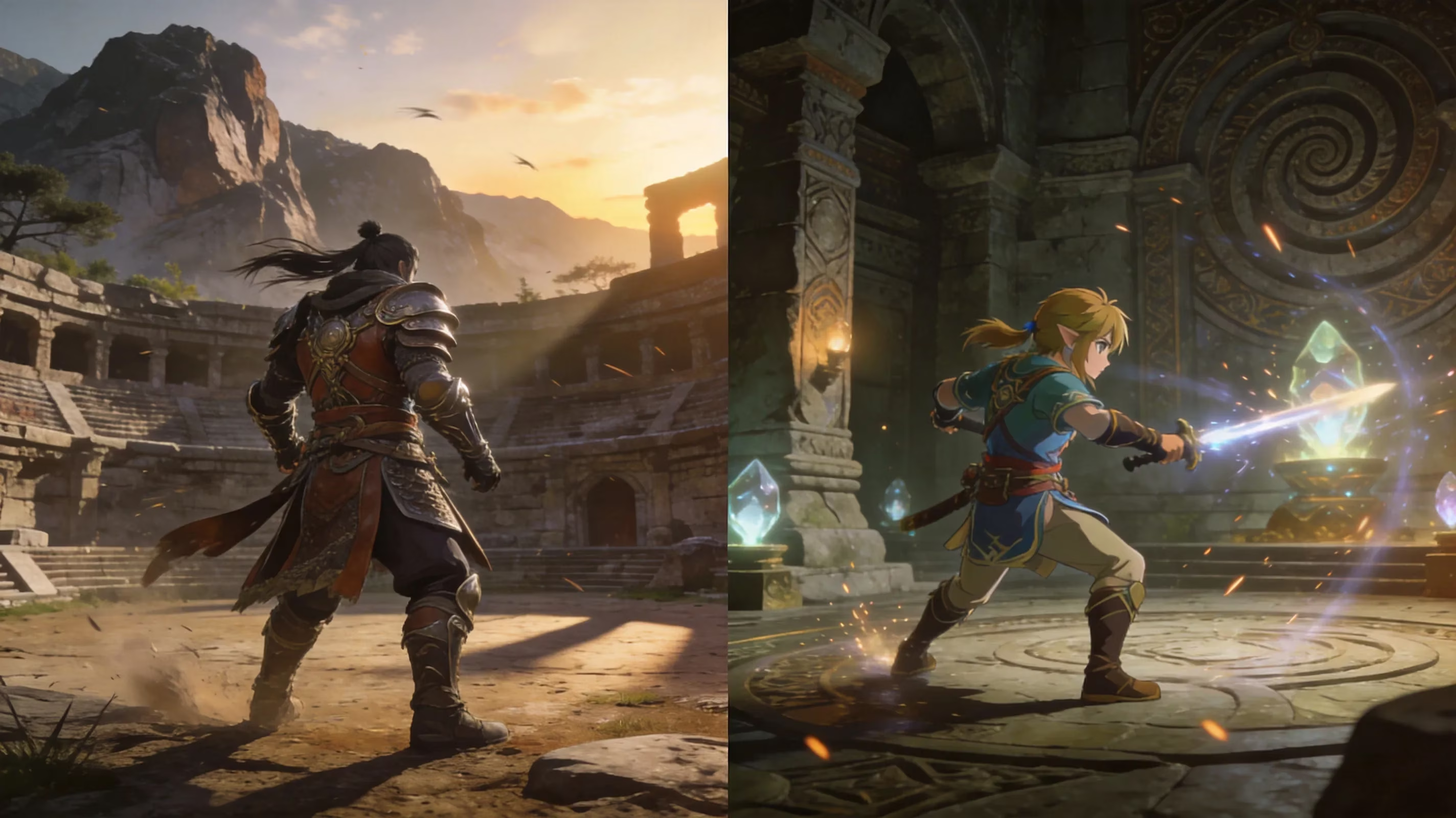
At the end of the day, answering is wuthering waves better than genshin really comes down to what kind of player you are. In 2026, both games are strong, but they serve different priorities.
| Player Type | Recommended Game | Reason |
|---|---|---|
| F2P / Strict Budget | Wuthering Waves (slight edge) | Better pity odds, weapon banner guarantee |
| Spender / Collector | Genshin Impact | Larger roster, more regional content |
| Hardcore / Mechanical | Wuthering Waves | Higher skill ceiling, Hologram difficulty |
| Casual / Story-first | Genshin Impact | Archon quest scale, relaxed combat |
| Returner after long break | Wuthering Waves | 2.0+ onboarding improvements, fresh content volume |
| Mobile-only, no controller | Genshin Impact | Touch controls better optimized for mobile |
| PC / PS5 / Controller | Wuthering Waves | Parry and swap mechanics sing on responsive input |
A few of these are especially worth calling out. F2P players get slightly better value in Wuthering Waves because of the pity structure and the weapon banner guarantee, although long-time Genshin F2P players with years of saved resources may still be better off staying in Teyvat simply because of existing account investment. Hardcore players who like pushing their execution ceiling will almost certainly get more out of Wuthering Waves over time, especially once they start digging into Holograms and high-end Tower clears.
Meanwhile, casual players, collectors, and story-focused users are generally better served by Genshin. It just offers more variety across its five-nation world, and its day-to-day rhythm is easier to settle into. Returners may find Wuthering Waves especially appealing, though, thanks to its 2.0+ onboarding improvements and the feeling that there's still a lot of fresh momentum behind its newer content.
Mobile-only players without controller support face one of the clearest trade-offs in this comparison. Wuthering Waves is playable on touch, no question, but its parry-heavy combat and swap timing become much harder to execute cleanly in difficult fights. Genshin, by contrast, was built with mobile in mind from the start, and that shows in how much smoother the touch experience feels.
Conclusion
There really isn't a universal winner here in 2026, and it's better to be honest about that than force a one-size-fits-all answer. Wuthering Waves stands out for its deeper mechanical combat, parry-focused gameplay, stronger low-end device performance, better weapon banner value, and more tightly written story arcs built around a smaller cast. Since 3.0, its world design has also improved in meaningful ways, especially with faster traversal and the expanded motorbike system, making it a seriously strong pick for players who want a live-service game that feels closer to a character-action RPG.
Genshin Impact, on the other hand, still wins on worldbuilding scale, exploration variety, elemental team-building depth, and the sheer amount of casual-friendly content packed into Teyvat. Five nations, dense puzzles, environmental storytelling, and Archon quests with huge production value give it a kind of breadth that no other gacha open-world game has fully matched yet. If you want a game you can sink into for the world itself, Genshin remains incredibly compelling.
For most new players in 2026, the smartest move is honestly to try both. They're free to start, so the risk is low. If you end up staying for the combat, Wuthering Waves will probably be your game. If you stay for the world, the story, and the slower-paced exploration loop, you'll probably stick with Teyvat. That's why the question is wuthering waves better than genshin doesn't have one final answer — but for your own playstyle, it usually becomes pretty clear once you've spent some real time with both.