
If you've been trying to figure out can you do tactical hologram in coop wuthering waves, here's the straight answer: no. As of Version 3.2 in 2026, Tactical Hologram is still completely solo-only, with no multiplayer support at all. That rule covers every version of the mode, including the newer Tactical Hologram: Synchronization arena in Lahai-Roi. If you're planning to push higher stages, it helps a lot to know where the restriction comes from and what you can realistically do to prepare outside the arena.
Can You Do Tactical Hologram in Co-Op Wuthering Waves
No, you cannot do Tactical Hologram in co-op in Wuthering Waves. Kuro Games treats the mode as an individual challenge, so once you enter a Hologram fight, only your own Resonator team goes in. There is no option to invite friends, no mid-run assistance, and no in-game spectate feature either.
This isn't some missing quality-of-life feature that just hasn't been added yet. It's very clearly part of the mode's design. Whether you're entering Tactical Hologram: Calamity, Tactical Hologram: Phantom Pain, or Tactical Hologram: Synchronization, the restriction stays exactly the same.
That also includes the Version 3.2 update. Even with Hyvatia joining the Synchronization lineup, the answer to can you do tactical hologram in coop wuthering waves did not change. In 2026, it's still a solo challenge from start to finish.
Tactical Hologram Modes and Access in Wuthering Waves
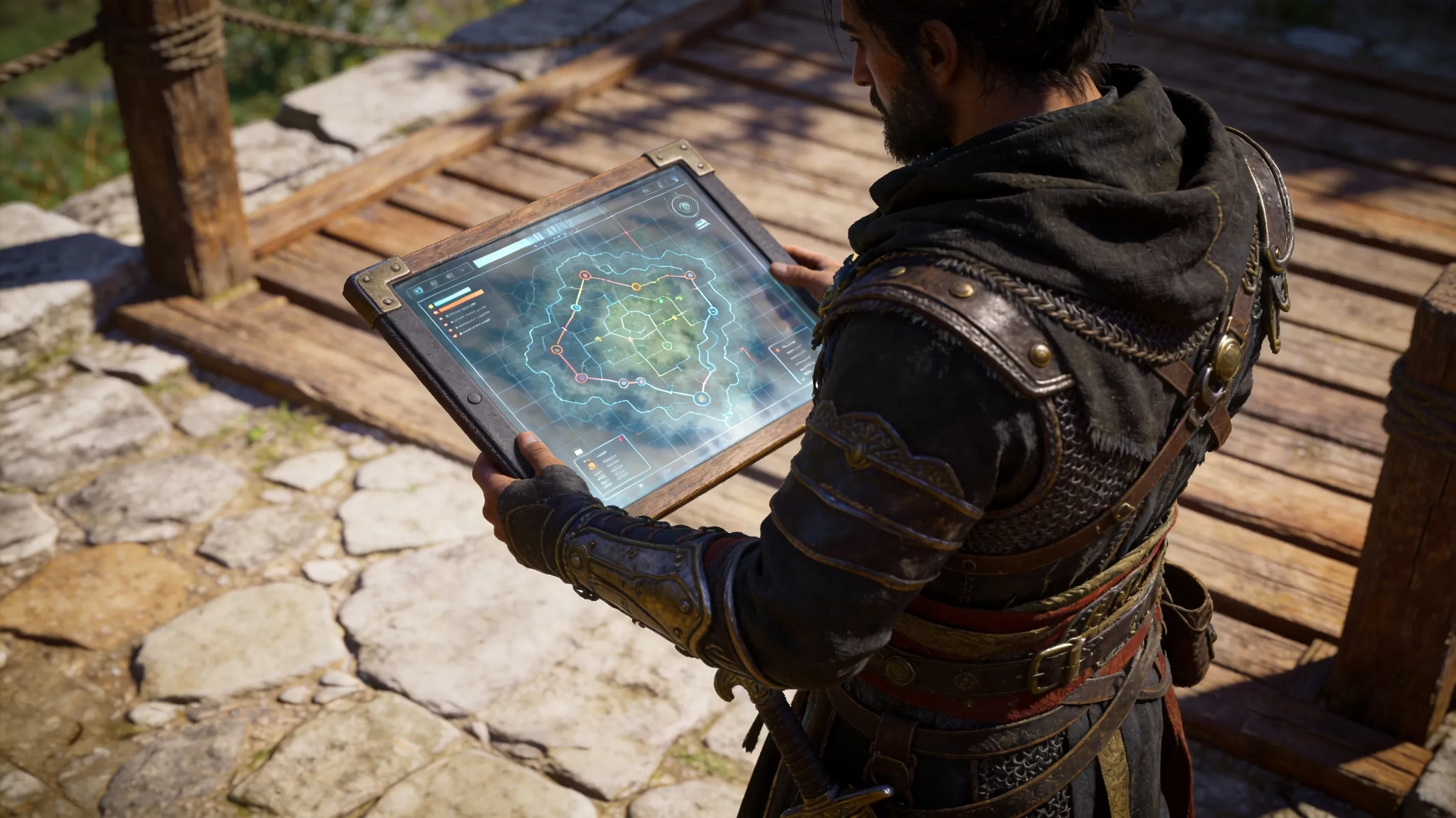
Tactical Hologram is split into three sub-modes, and each one is tied to a different region, arena setup, and unlock condition.
| Mode | Region | Unlock Requirement |
|---|---|---|
| Tactical Hologram: Calamity | Huanglong | Union Level 27 |
| Tactical Hologram: Phantom Pain | Rinascita (Thessaleo Fells) | Complete "Shadows of the Past" quest |
| Tactical Hologram: Synchronization | Lahai-Roi (Startorch Academy) | Complete "Into the Battle Simulation!" tutorial |
Tactical Hologram: Calamity is the original set of Hologram fights. It includes bosses like Crownless, Inferno Rider, Feilian Beringal, Impermanence Heron, Mourning Aix, and Tempest Mephis, spread across Huanglong. You unlock these once you hit Union Level 27, with no extra quest requirement attached.
Tactical Hologram: Phantom Pain is the Rinascita branch of the system. Instead of separate boss locations, it uses a consolidated arena in Thorncrown Rises in Thessaleo Fells. To access it, you need to finish the "Shadows of the Past" questline first.
Tactical Hologram: Synchronization is the newest branch and uses the Startorch Academy simulator in Lahai-Roi. In Version 3.2, released on March 19, 2026, Hyvatia was added to this roster alongside Dreamless and Reactor Husk. You unlock the mode by completing "Into the Battle Simulation!" and then speaking with Napolita.
Each of these modes has six difficulty stages, and Stage VI is the real endgame wall, featuring Level 100 enemies.
Why Tactical Hologram Has No Co-Op in Wuthering Waves
The big reason is pretty simple: Tactical Hologram is meant to be a skill-check endgame mode. Unlike overworld bosses or weekly content that works fine in multiplayer, Holograms are built to test how well you understand your team, your rotation, and the boss itself.
A huge part of that is the time-record leaderboard. The mode tracks how fast each player clears every boss at every difficulty. That system only really works if everyone is playing under the same solo conditions. The second co-op gets involved, those clear times stop being a clean comparison.
The boss mechanics also make more sense in a solo format. Higher stages, especially Stage V and Stage VI, introduce Special Mechanisms that revolve around tight parry timing, phase transitions, and pressure-heavy mechanics. In Dreamless Synchronization, for example, the Halberds of Destruction deflect timing is meant to be handled by one player cleanly. If multiple players were involved, the mechanic would either become way too easy or just turn messy fast. Reactor Husk has a similar issue, since its Phase 2 arm-break windows are designed around precise solo punish timing.
The rewards structure points in the same direction. Tactical Hologram gives one-time first-clear rewards for each difficulty stage, including Astrite, guaranteed 4-star or 5-star Echoes, Data Sets, and Premium Tuners. Reworking that into a party-based reward system would mean changing the mode at a pretty fundamental level, and right now that clearly isn't what Kuro wants the mode to be.
What You Can Do Instead of Co-Op for Tactical Hologram
Even though the answer to can you do tactical hologram in coop wuthering waves is still no, co-op can absolutely help with your prep.
A really practical option is to use multiplayer for boss practice outside the Hologram arena. Running standard boss encounters with friends lets you get used to attack strings, dodge timings, and general movement without the pressure of a failed Hologram attempt. For newer fights like Hyvatia, that kind of repetition helps a lot.
You can also use co-op to check whether the issue is your mechanics or just your build. Farming Tacet Fields and regular bosses with friends speeds up Echo progress, and that matters way more than some players expect. If you're stuck on Stage IV, it may not be a gameplay problem at all—you might just need cleaner substats, better weapon investment, or more Forte levels.
A few useful alternatives:
-
Farm together before solo attempts: Echoes, ascension mats, weapon mats, and Tuners all feed directly into Hologram readiness.
-
Compare builds with friends: Sometimes an outside opinion catches weak CRIT balance, wrong Sonata choices, or underleveled Forte nodes immediately.
-
Use screen share for pseudo-spectating: Since the game has no native spectate mode, Discord or similar platforms are the easiest workaround.
-
Practice on overworld versions first: Learning patterns in a lower-stakes setting makes the solo Hologram grind much less punishing.
That last one is honestly underrated. A lot of failed Hologram runs come down to unfamiliarity, not lack of damage.
Solo Clear Setup for Tactical Hologram Wuthering Waves
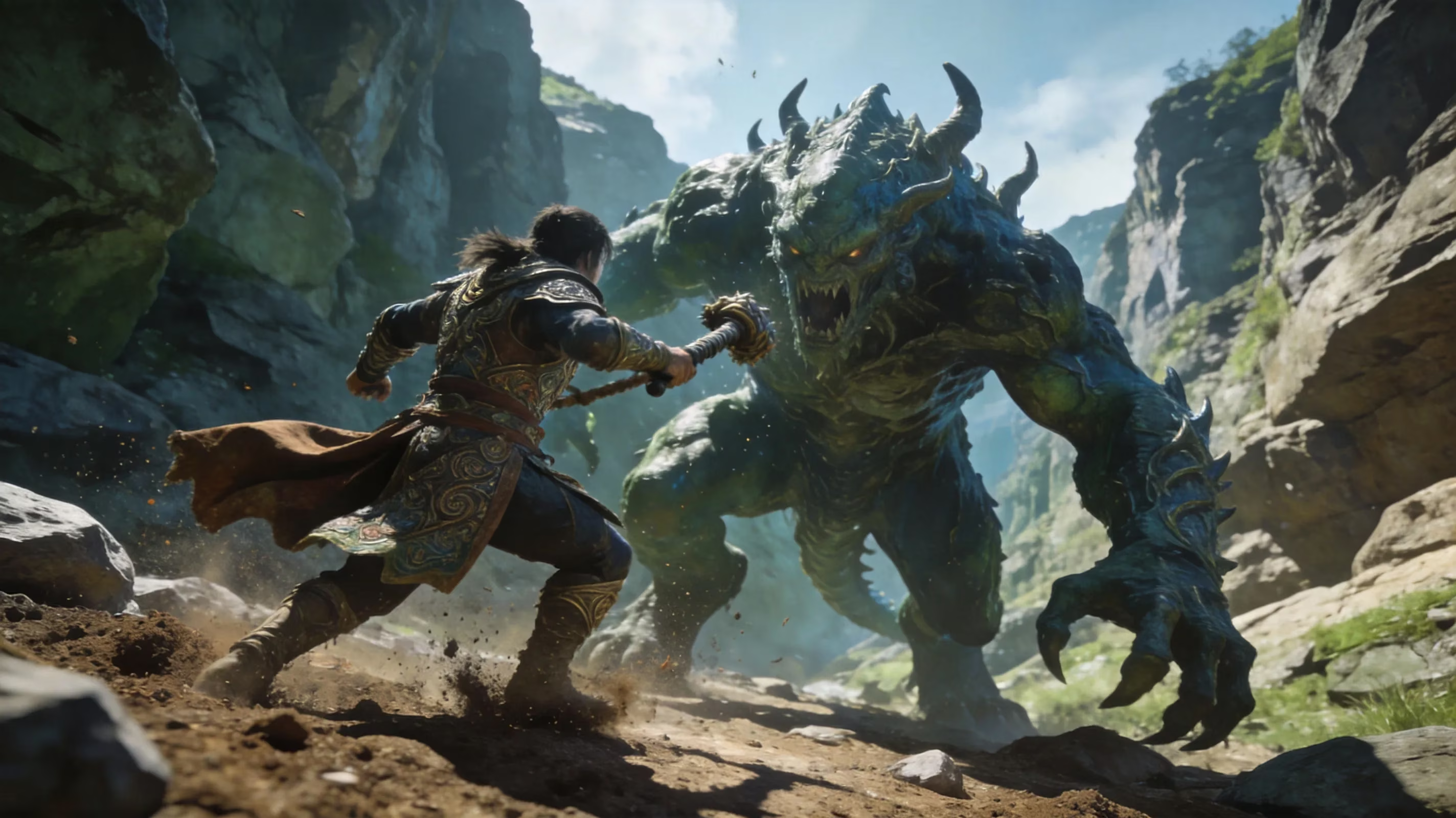
If you're trying to brute-force Tactical Hologram without a proper setup, especially at Stages V and VI, things usually go badly. You need a stable solo framework before you start chasing cleaner times.
Healer slot priority is one of the biggest things to get right. At higher difficulties, running a sustain unit like Shorekeeper or Verina is less of a comfort pick and more of a safety requirement. They bring reliable healing, and at higher Sequence levels they can also provide revive-style insurance during learning runs. In Synchronization, this matters even more because revival items with cooldowns are allowed, which gives sustain-heavy teams extra room to recover.
Mechanically, the mode revolves around parry, dodge, and Tune Break. Tune Break is what opens up your best damage windows by interrupting attacks and lowering Vibration Strength. If you want consistent clears, you should know exactly which attacks are worth parrying on each boss. Reactor Husk's Heavy Swings in Phase 2 are a great example, and Dreamless's Halberd projectiles are another.
For raw build checks, the thresholds are pretty demanding by Stage VI. At Level 100 enemy scaling, you generally want:
-
Cost 4 Echoes at Level 25 with CRIT Rate or CRIT DMG main stat
-
Cost 3 Echoes at Level 20 with ATK% or Elemental DMG Bonus
-
Around 40% total CRIT Rate minimum
-
At least 120%+ CRIT DMG
-
Weapons at Level 80 or higher
-
Relevant weapon passives active
-
Forte Circuits at Rank 10
Those aren't luxury benchmarks. They're pretty close to the baseline for comfortable Stage VI attempts.
As for team structure, the safest general setup is still:
-
Main DPS for the bulk of your field damage
-
Sub-DPS with solid Concerto Energy generation
-
Support/Healer to stabilize long multi-phase fights
For Synchronization specifically, teams that apply Negative Status can gain extra value. Aero Erosion lineups with Cartethyia, for instance, can help expose boss vulnerability cores automatically, which smooths out several mechanics.
Difficulty Push Route
If you're new to Tactical Hologram, the best route is the obvious one: go Stage I to Stage VI in order. You need to clear each lower stage to unlock the next anyway, so trying to skip ahead isn't an option.
The first-clear rewards become much more worthwhile from Stages III through VI, and guaranteed 5-star Echoes start showing up at Stage III. Because of that, it's smart to prioritize bosses whose Echo drops match the Sonata Effect your main DPS actually needs. That way, your clears are improving your account in two ways at once.
Boss-specific counter picks also matter more than people sometimes admit. Bringing a Resonator with favorable elemental interaction can noticeably improve burst windows and shorten the fight, which is important not just for survival but also for your recorded clear time.

2026 Meta Notes
The three Synchronization bosses each ask for something a little different right now.
Hyvatia, added in Version 3.2, puts a lot of pressure on your handling of phase transition triggers. Teams with reliable Tune Break access feel much smoother here, because they can create safer punish windows instead of just scrambling through the transitions.
Dreamless heavily rewards players who can consistently deflect Halberd of Destruction projectiles. Doing that lowers her Vibration Strength faster and helps delay the Twilight Eve summon, which is the mechanic that really spikes arena pressure during Looming Turmoil.
Reactor Husk is all about understanding when and how to expose the core. In Phase 1 and Phase 3, Negative Status effects like Aero Erosion can automatically reveal the Vulnerable Core. In Huntfire Phase 2, though, status-based exposure is suppressed, so you need to switch over to parry-based arm-break timing instead. That's the kind of boss knowledge that separates a clean clear from a dragged-out survival run.
Tactical Hologram Co-Op Wuthering Waves FAQ
Can friends enter a Tactical Hologram arena together?
No. Tactical Hologram is an instanced solo mode, so only your own three-Resonator team can enter. You cannot send or accept co-op invites once the challenge starts.
Is Kuro Games planning to add co-op to Tactical Hologram later?
As of Version 3.2 in 2026, there has been no official announcement about co-op support for Tactical Hologram. Players have asked for it plenty of times, including ideas for optional co-op clears with separate solo records, but nothing on the roadmap has been confirmed. Given the leaderboard structure and the mode's role as a personal skill test, a co-op version does not look likely in the current format.
Can you farm the rewards repeatedly?
Not the major first-clear rewards. Astrite, guaranteed Echo rewards, and similar stage-clear bonuses are one-time claims per boss per difficulty stage. After you've cleared all six stages for a specific Hologram boss, you won't keep getting those same first-clear rewards. You can still earn Data Sets for the Simulation Training Store, but the premium rewards are not repeatable.
Which Tactical Hologram boss should you start with?
For most players, Crownless from Calamity is the best first target. Its patterns are well known, the fight teaches core parry-and-stagger fundamentals, and its H80 Echo is useful for several strong Havoc Resonators. After that, Tempest Mephis or Feilian Beringal usually make for a natural next step depending on your team and comfort level.
Conclusion
So, if you're still asking can you do tactical hologram in coop wuthering waves, the answer is a clear no. Tactical Hologram is built as a solo endgame challenge, and that design ties directly into its leaderboard system, boss mechanics, and one-time reward structure.
What you can do is use co-op smartly outside the mode itself—farm Echoes, test builds, practice boss patterns, and review runs with friends through screen share. If you want to clear Calamity, Phantom Pain, and Synchronization consistently, your best path is still the solo one: tighten your parries, learn the phase mechanics, and build around reliable Tune Break windows. It's a solo grind, yeah—but with the right prep, it's absolutely manageable.