
If you're asking does wuthering waves have representation, the most honest 2026 answer is: yes, but not evenly across the board. Kuro Games has built one of the most mechanically impressive live-service action RPGs out right now, and the playable roster is closing in on 40 distinct Resonators spread across six elements. But when you look past combat depth and start asking whether that roster reflects a broad range of human identity — skin tone, body type, cultural background, and character expression — the picture gets a lot more mixed. In this article, we're taking a closer look at where Wuthering Waves is doing well, where it still falls short, and what the 3.3 update plus the Cyberpunk: Edgerunners collab might actually change.
Does Wuthering Waves Have Representation Right Now
The short version is pretty straightforward: Wuthering Waves does have representation in some meaningful ways, but it also has some very obvious blind spots. As of Version 3.2, the game offers a fairly balanced male-to-female roster, a solid spread of personality types, and world design that pulls from more than one real-world cultural influence — from the East Asian-inspired Huanglong to the Mediterranean-coded Rinascita. Those are real strengths, and they do help the game stand out.
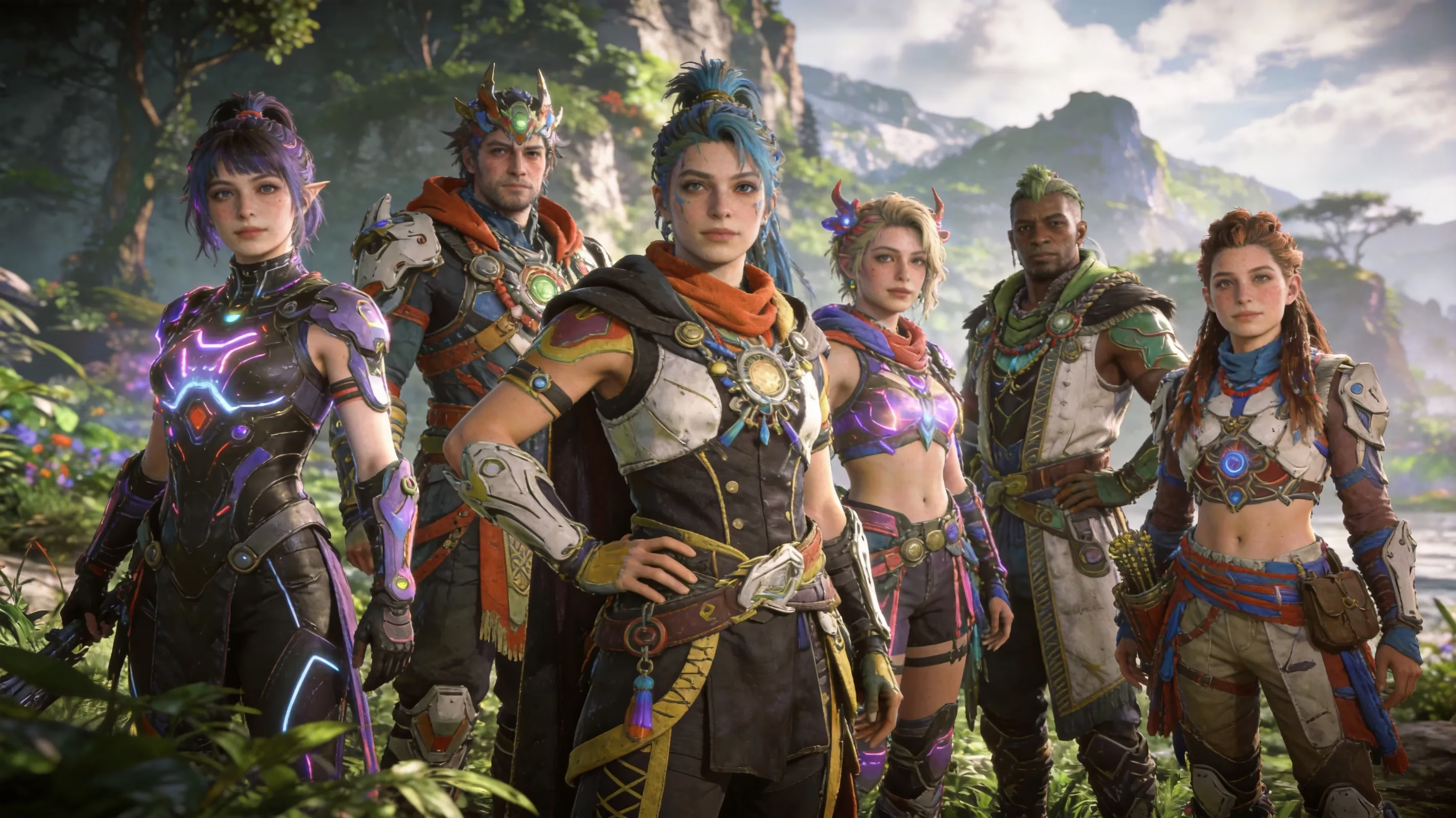
That said, the biggest gap is also the one players bring up most often on Reddit and X: skin tone diversity in the playable cast. Most Resonators still skew very light-skinned. Characters like Taoqi and Calcharo read a little warmer in complexion, but there are still very few playable units that come across as clearly Brown or dark-skinned. NPCs, interestingly enough, show more tonal variety across the world, which honestly makes the contrast even harder to ignore.
| Representation Category | Current Status | Community Sentiment |
|---|---|---|
| Gender balance (male/female) | Fairly balanced | Positive |
| Skin tone diversity | Limited in playable cast | Frequently criticized |
| Body type variety | Narrow range | Moderately critical |
| Cultural visual influences | Broad (multiple regions) | Generally positive |
| Personality archetype range | Wide | Positive |
| NPC diversity | Strong | Positive |
Wuthering Waves Character Representation by Category
Ethnic and skin tone representation
The light-skinned roster trend is still one of the clearest pain points in Wuthering Waves. Players from Black, South Asian, and mixed-heritage backgrounds have been asking since launch whether the game will eventually add playable Resonators who look more like them, and that conversation has not gone away in 2026. If anything, it's become more pointed as the roster keeps expanding without a major breakthrough in this area.
A lot of longtime gacha players have compared this directly to older frustrations they had with Genshin Impact. The feeling is familiar: strong worldbuilding, broad cultural inspiration, but a playable cast that stays inside a fairly narrow visual comfort zone. Some Resonators do have design traits that players interpret as coded representation — maybe through facial features, hair texture, or stylized fantasy coloring — but those reads are still interpretive rather than explicit. At nearly 40 playable characters, the lack of an unmistakably dark-skinned five-star Resonator remains a very real gap.
Gender and character archetypes
On gender balance, Wuthering Waves is in a much better spot. The roster is roughly split between male and female Resonators, and the game does a decent job avoiding the trap where one side gets all the combat relevance or all the personality range. Male characters go from heavy-hitting, commanding figures like Calcharo and Jiyan to more reserved or cerebral personalities like Aalto, while female characters cover DPS, sustain, support, and hybrid roles without feeling boxed into one lane.
Where things narrow again is body type variety. Most playable characters, regardless of gender, fit the same slim, conventionally attractive anime-gacha silhouette. That's not unusual for the genre, but it is still a limitation. Fanservice is definitely present, especially among some female five-stars, though it doesn't completely take over the roster. There are also more restrained outfits and designs that lean harder into personality than pure visual appeal. Version 3.3's outfit accessory system helps a bit here too, since it gives you more control over how characters present on your account.
Personality and narrative representation
This is probably the category where Wuthering Waves performs best. Its Resonators come from different factions, social classes, and personal histories — soldiers, scholars, merchants, exiles, and more — and that variety shows up in how they speak, act, and fit into the story. If you spend time with companion quests, you can tell the writers usually want these characters to feel internally coherent rather than just built around one gimmick.
The game is also fairly strong when it comes to how it handles female characters. A lot of them are written as active drivers of their own stories instead of just reacting to someone else's arc. On top of that, Rover being canonically gender-selectable gives the player character a baseline level of identity flexibility, which matters more than some people give it credit for.
Male characterization deserves some credit too. Wuthering Waves makes room for men who are vulnerable, gentle, introspective, or emotionally restrained without turning those traits into a joke. You can see that softer masculinity in parts of the cast around characters like Mortefi and Verina's supporting circle, and it gives the overall tone a wider emotional range than a lot of comparable gacha games manage.
Wuthering Waves Story, Regions, and Cultural Representation
Wuthering Waves pulls from real-world cultural aesthetics in ways that go beyond just surface decoration. Huanglong is clearly rooted in classical Chinese visual language, especially in its architecture and environmental design. Rinascita, which arrived in the 2.0 update, leans heavily into Italian Renaissance imagery. Then you have places like the Roya Frostlands and later regions expanding that sense of geographic and artistic variety even further.
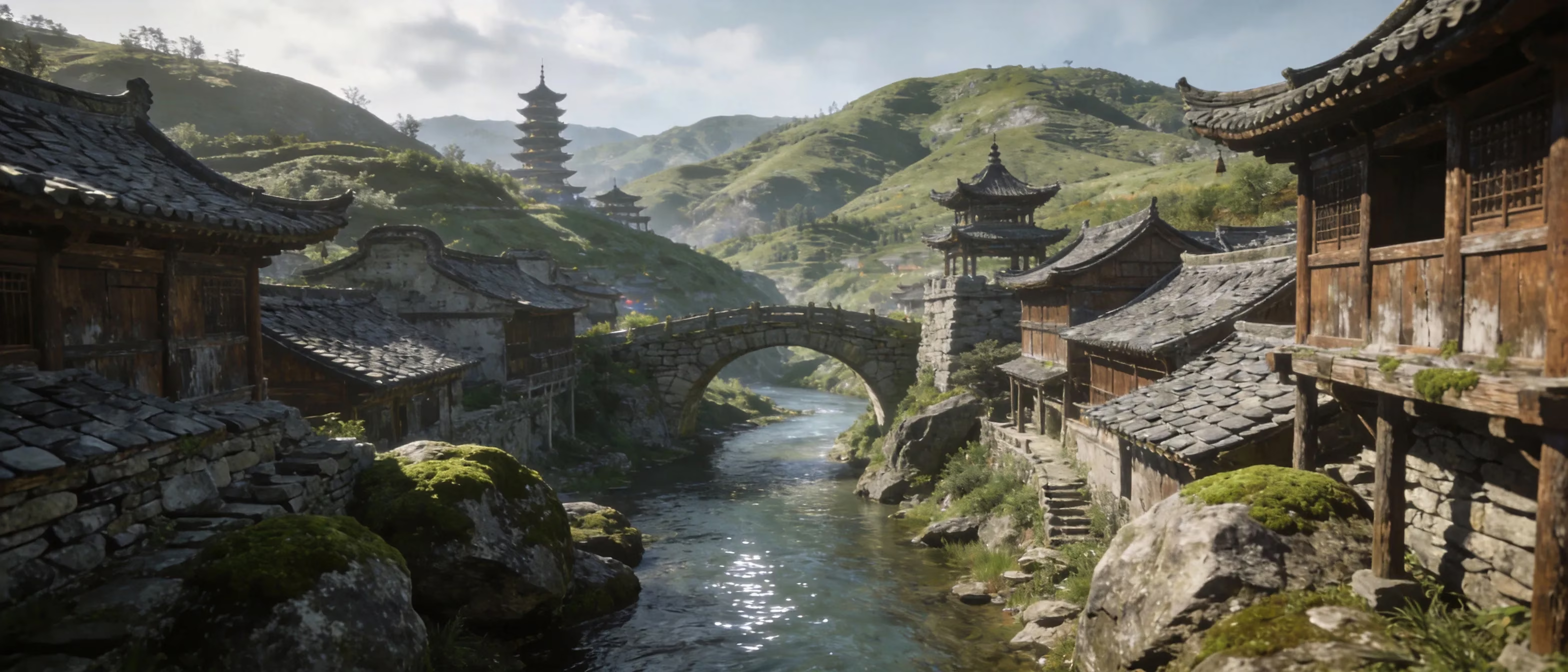
The issue, as critics often point out, is that the world itself feels more visually diverse than the playable heroes inside it. NPCs across these regions usually show a broader range of skin tones and facial structures than the Resonator roster does. So you end up with a world that says, very clearly, "we're inspired by many cultures," while the characters pushed to banner status still skew overwhelmingly pale and conventionally East Asian or European-coded in appearance. That's where a lot of the dissonance comes from.
Localization is one area where the game generally lands well. The English version has been received fairly positively, and the voice direction feels deliberate rather than generic. The cast shows moderate diversity, and the performances usually give characters distinct identities instead of flattening everyone into the same tone. That doesn't solve visual representation issues, of course, but it does help the game feel more textured in practice.
Wuthering Waves Representation in 2026 Updates
Version 3.2 to 3.3 roster signals
Version 3.2 put a major spotlight on Lucilla, and she quickly became one of the most talked-about characters of 2026. As a school president and memory-based Resonator, her story digs into identity in a way that feels more personal than a lot of standard gacha writing. Her arc is built around confronting the limits of her own Resonance ability and refusing to let past weakness define who she becomes. If you care about strong character writing and self-possessed female leads, Lucilla is honestly one of the game's better examples.
Version 3.3, Reverbs from the End of Galaxies, launches on April 30, 2026 and adds two new playable Resonators: Hiyuki and Denia. Hiyuki is a soft-spoken sword user whose gray hair, red eyes, and composed demeanor gave her a strong first impression when she appeared in 3.2 Part 2. Denia, on the other hand, comes across as morally complicated rather than flat-out villainous, with story hints suggesting pressure and circumstance rather than simple malice. Both characters help expand the personality spread of the roster. Neither one, based on currently available designs, does much to move the needle on skin tone diversity.
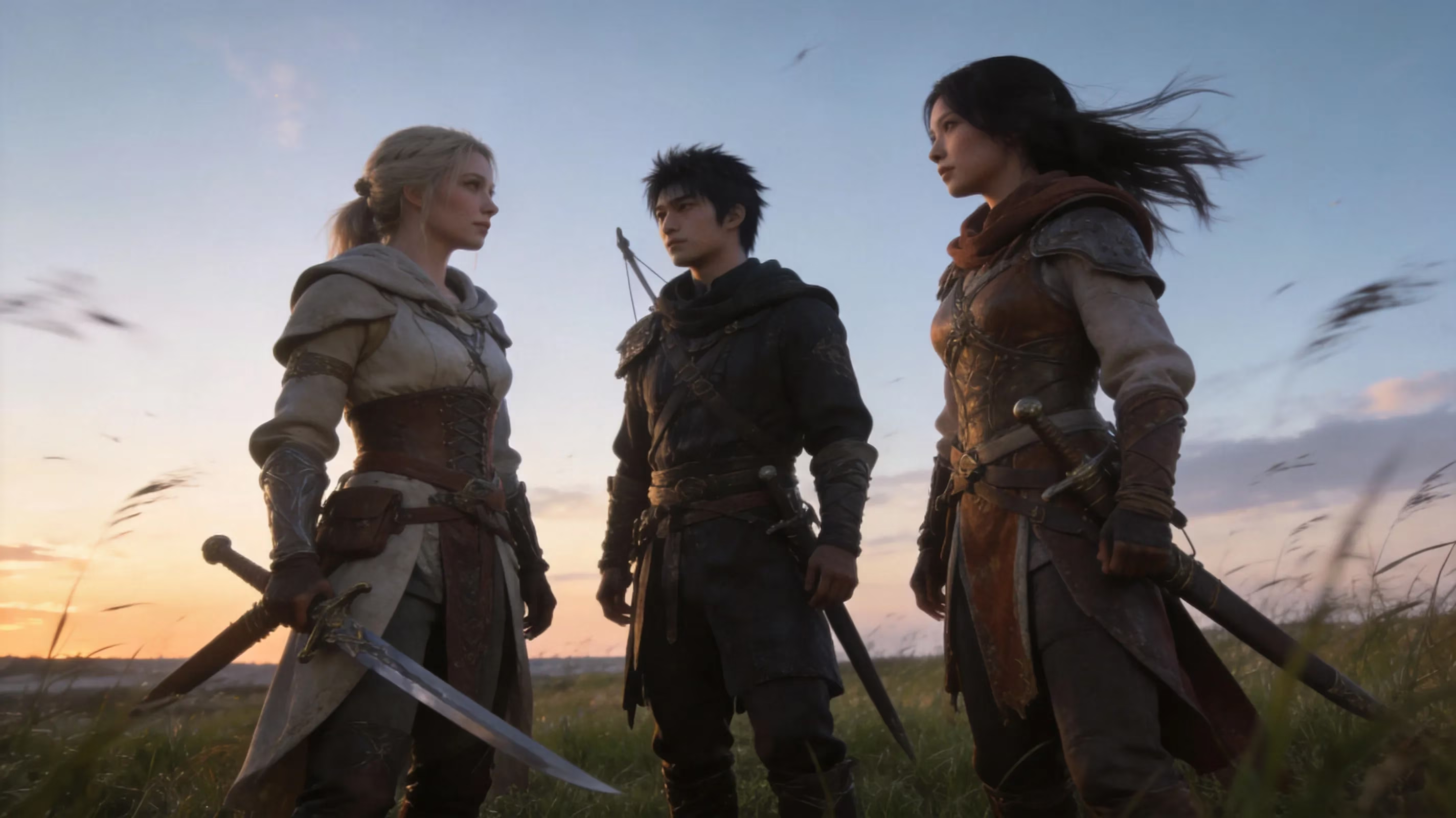
The new outfit accessory system in 3.3 is worth mentioning too. It lets players customize Resonators with extra gear items, adding another cosmetic layer to character presentation. That's not the same thing as broader built-in representation, obviously, but it does give players more room to personalize how their roster looks.
Cyberpunk Edgerunners collab representation
Back in April 2026, English voice director Wendee Lee briefly posted — and then deleted — an image on X that included the names "Lucy" and "Rebecca" alongside the text "Cyberpunk x Wuthering Waves." Most players took that as an early confirmation of the collab first teased during the Version 2.3 preview stream in April 2025. Since Lucy and Rebecca are two of the most popular characters in the Cyberpunk: Edgerunners fandom, the reaction was immediate.
From a representation angle, this collab is a bit complicated. Lucy and Rebecca are already established characters with very recognizable designs. Lucy has a lighter complexion, while Rebecca stands out more through her compact build and intensely stylized personality. If they arrive, they would absolutely add high-visibility female characters with strong fan recognition to the roster.
Still, collab units are not the same thing as core roster direction. They're usually limited, event-framed, and treated as special cases rather than signs of a lasting design shift. So while the Edgerunners crossover could be exciting for a lot of players, it shouldn't automatically be read as proof that Wuthering Waves is changing its long-term approach to representation. If you're specifically waiting for the base cast to become more demographically varied, it's best to keep expectations realistic.
Does Wuthering Waves Listen to Representation Feedback
Player feedback on representation has been pretty consistent across Reddit, X, and official community spaces. Posts asking for darker-skinned playable Resonators have been around since launch, and they tend to be thoughtful rather than inflammatory. Most players raising the issue are not framing it as some all-or-nothing boycott demand. They're usually just saying, plainly, that it matters to them and that they'd like to feel more visible in the cast.
Kuro Games does have a strong reputation for responding when gameplay is involved. The studio is quick with bug compensation, generally attentive to balance concerns, and has improved quality-of-life systems steadily over time. Where things get less clear is aesthetic feedback. There hasn't been a public statement directly addressing skin tone diversity in the playable roster, so players are mostly left reading patterns rather than getting a direct answer.
And that's where the monetization reality comes in. In a gacha game, every five-star is also a product. Kuro's incentive is to create characters with the broadest possible pull appeal, and historically that has pushed a lot of gacha rosters toward very narrow beauty standards. Real diversification in this genre usually happens for one of two reasons:
-
The developers are committed to it from the start.
-
The market makes it clear that exclusion is costing them players.
Neither outcome is impossible here. But neither one is something players can assume will happen automatically.
If meaningful change does happen, it will probably be obvious when it arrives. The clearest benchmark would be a five-star Resonator with unmistakably darker skin, built with the same level of investment as any marquee limited unit — unique Forte mechanics, full voice work, a proper companion story, major cinematics, the whole package. Until then, the answer to does wuthering waves have representation is still a partial yes rather than a complete one.
Conclusion
For new players trying to figure out whether Wuthering Waves will feel inclusive, the answer really depends on what kind of representation matters most to you. The game does a lot right when it comes to gender balance, personality range, and giving female characters real narrative agency. Its worldbuilding pulls from multiple cultural aesthetics, the localization is strong, and newer characters like Lucilla show that the writing team can deliver genuinely compelling identity-driven stories.
The most persistent weakness is still skin tone diversity in the playable cast. If it's important for you to see a dark-skinned or visibly Brown playable lead reflected in the roster, Version 3.3 still doesn't offer that consistently. NPCs are more varied, sure, but NPCs are not banner units, not the faces of promotional art, and not the characters anchoring your teams. The Cyberpunk: Edgerunners collab may be exciting, but it doesn't replace organic roster diversification.
At the end of the day, does wuthering waves have representation comes down to what you personally need from a game. If personality-forward writing, gender balance, and culturally influenced world design are enough to make you feel seen, there's real value here. If your main benchmark is visible skin tone diversity in the playable roster, the game is still falling short — and the next regions and character waves after Version 3.3 are what you'll want to watch most closely.