
The battlefield is a canvas of motion—a place where instinct meets precision, and every heartbeat is a risk. In Wuthering Waves, combat is not just a brutish exchange of blows. It is a conversation. And the lexicon of that conversation? The dodge and the counter attack. Two subtle arts that, when woven together, elevate a brawler into a poet of war.

A Resonator who only strikes is a storm without direction—powerful, yes, but doomed to break against an immovable force. The world of Solaris-3 is unforgiving; enemies do not wait, and their strikes carry the weight of desolation. But time itself... well, time can be persuaded to pause, if you know how to ask.
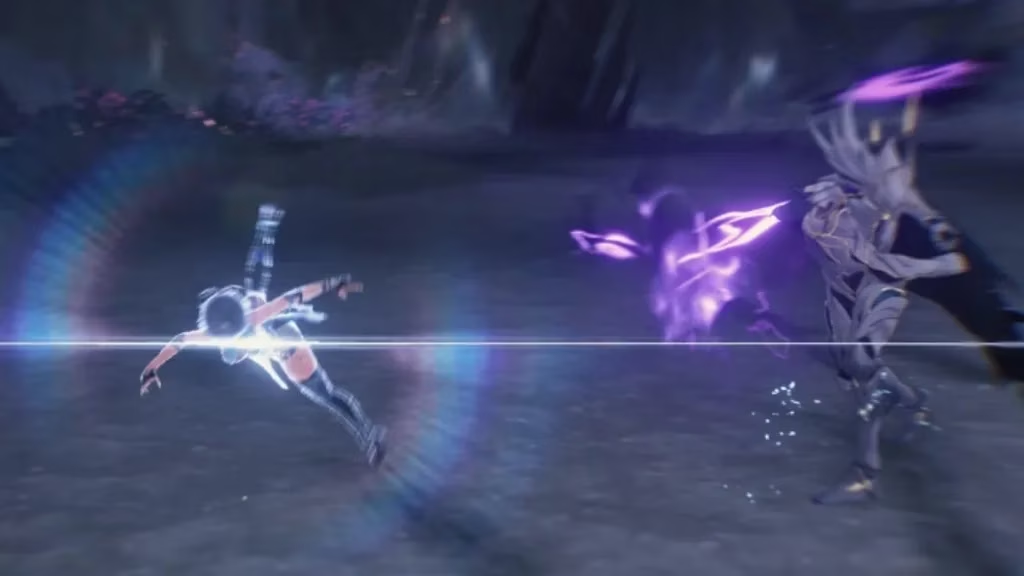
At the heart of this lies the Perfect Dodge. Picture a Tacet Discord winding up a crescent sweep—its scythe-like limb carving the air with a low, hungry growl. The player feels the tension coiling in the controller, the screen practically trembling with incoming violence. And then, with a click of the dash button, right as the blow would have landed... the Resonator melts sideways in a blur of motion, untouched. Immunity wraps around them like a cloak of wind. The afterimage of the dodge lingers, a ghost of what could have been, and the battle continues—but now the tempo belongs to the evader.
This isn't running away. Oh no. The game itself acknowledges the artistry: if you press dash right before impact, the game doesn’t just move your character out of the way—it performs a distinct, automatic dodge animation. It’s a reward for nerves of steel. You know what they say—timing is everything, and Wuthering Waves respects that better than most.
But dodging, for all its elegance, is only half of the waltz. The more daring, the more devastating partner waits in the wings: the Counter Attack.
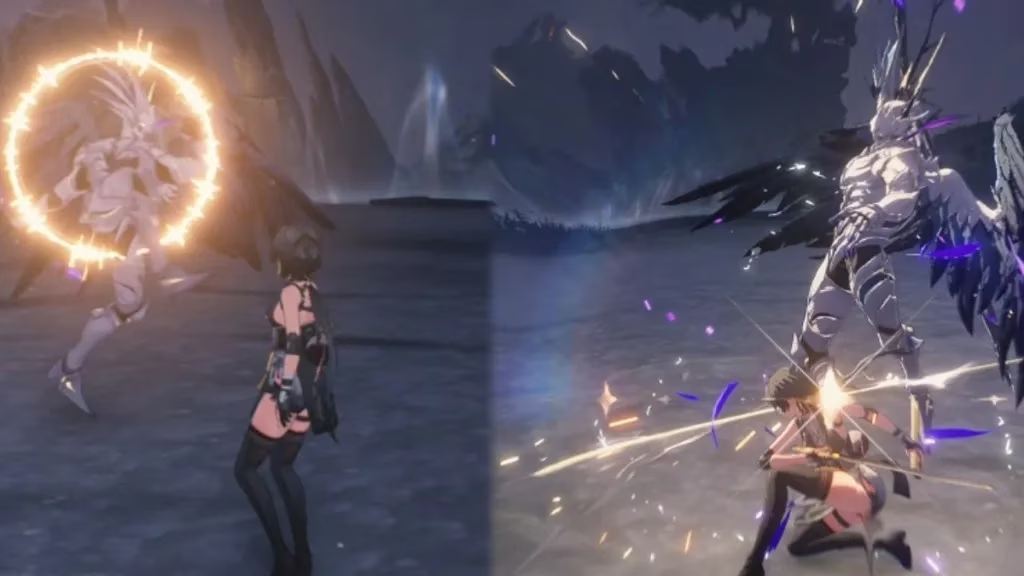
Here’s where things get interesting. Not every enemy move can be simply sidestepped; some carry the weight of a scripted cataclysm. The game signals these moments with a sudden, vivid yellow halo pulsing around an enemy. It’s like the world itself is holding its breath, whispering, “Pay attention.” In that suspended instant, a wild swing isn’t just welcome—it’s mandatory. If you strike the enemy while that halo glows, the Resonator doesn’t just attack—they counter. The enemy’s special move, that massive, screen-filling threat, gets interrupted. Swallowed. Rejected. And in its place, your own blow smashes through, turning the enemy’s fury into a teachable moment.
Honestly, it’s a bit of a game-changer. You’re not just surviving; you’re rewriting the next few seconds of the fight. The command input? The same as a regular attack. No extra buttons, no meter to charge. Just awareness. That’s the real kicker—the game trusts you to read the visual cue and react. It’s a silent pact between player and design, and when it clicks, it feels like lightning in a bottle.
Dodging and countering, together, are not mere mechanics; they are the rhythm section of every encounter. A fight becomes a narrative told through motion: the opening staccato of probing strikes, a sudden hush as the dodge carries you through a killing blow, and then—the crescendo—a counter that shatters the enemy’s momentum and leaves them reeling. The Resonator wields time like a blade, slicing moments in half and stitching them back together into a new sequence, one where their survival is the only inevitability.
Since its release in 2024, Wuthering Waves has continually refined this ballet of frames and feedback. In the two years that followed, countless new echoes and Resonators have arrived, each dancing with their own dodge animations and counter timings, but the core truth remains unaltered: the player who masters the pause between danger and death becomes untouchable. There’s a quiet poetry in that... a story that unfolds every time a yellow halo flares and a finger finds the attack button.
The combat system asks for nothing less than presence. No button-mashing will grant these gifts; only a mind that learns to read the silent language of threat and opportunity. It is a discipline, yes, but also a liberation. Because when you stand before a monstrous tide and know that its very momentum can be turned into your weapon... well, that’s when you understand why Wuthering Waves feels less like a game and more like a living legend.
So step into the fray. Feel the world slow as you dodge through a storm of claws. Watch for the golden halo—the invitation to defiance. Let your Resonator speak in the dialect of counters, and turn every fight into a story worth retelling.