
I remember the days when adding a voiceover to a video felt like summoning a small miracle. You’d book a voice actor, schedule studio time, and then pray the delivery wouldn’t crack under pressure. Fast‑forward to 2026, and my entire workflow has flipped on its head. AI voice generators stepped in not just as a helper, but as my secret weapon. Let me walk you through how these tools rewired my content creation, and why I think they’ll do the same for you.
⚡ Lightning‑Fast Turnaround, Even on a Monday Morning
Before AI, I’d lose hours just getting the right take. The talent might need five revisions, and I’d be stuck editing out awkward pauses. Now? I drop my script into an AI voice generator, pick a tone, and in minutes a crisp voiceover lands in my timeline. Honestly, it’s like having a tireless narrator living inside my editing software. For tutorials, product demos, or those last‑minute social cuts, this speed is a lifesaver. I can iterate three versions of a voiceover before my coffee gets cold. That breathing room lets me focus on the creative shots rather than sweating over audio.
💸 Pocket‑Friendly Professionalism
Let’s talk money, because not all of us have a blockbuster budget. Hiring a pro voice actor in 2026 can still set you back hundreds per session, and that’s before booking a studio. AI voice generators slashed that cost to nearly zero. Many platforms offer freemium tiers that already sound fantastic, and even the pro plans cost less than a pizza delivery subscription. I’ve run side‑by‑side tests with friends, and they couldn’t tell the difference between my AI narrator and a human one. For a solo creator juggling rent and gear, that’s the kind of win you take to the bank.
🎛️ A Paint Palette for Voices
Here’s where it gets fun. Need a bubbly, high‑energy explainer voice? Done. A calm, boardroom‑ready narrator? Easy. The versatility of AI voice generators in 2026 is mind‑blowing. I can tweak pitch, speed, and even the emotional undertone until it matches my video’s heartbeat. Recently I created a campaign for a global audience and switched between warm Latin American Spanish, crisp French, and gentle Mandarin—all within the same tool, no extra voice actors needed. It’s like having a language‑switching chameleon at my command. The customization isn’t just practical; it sparks creativity because I’m no longer limited by “who’s available,” but by “what vibe fits best.”
🔁 Rock‑Solid Consistency, Day After Day
Human voices tire, catch colds, or simply sound different on a Wednesday. AI? It shows up exactly the same every single time. For my series content, this consistency is pure gold. Brand trust hinges on that stable, familiar audio signature. Plus, if I need to update an old video or splice in a new sentence, I just regenerate the text—no hunting down a busy talent. The voice never breaks character, never mispronounces a brand name after the tenth take. That reliability has turned my post‑production into a smooth, boring (in the best way) assembly line. And let me tell you, boring can be beautiful when deadlines are breathing down your neck.
🌍 Unlocking a Global Living Room
Making locally flavored content used to be a logistical nightmare. Now I create one master video and generate voiceovers in half a dozen languages by lunchtime. This reach isn’t just a numbers game—it’s about connection. A viewer in Tokyo or São Paulo hears a fluid, accent‑accurate narrator and immediately feels at home. I’ve paired these voiceovers with AI video upscalers to keep visuals crisp, and the combination feels like opening a mini broadcast station for every region. The doors it opens for niche audiences and international brand deals are honestly a bit surreal.
🛠️ How I Work the Magic (A CapCut Quick‑Start)
If you’re itching to try this, let me share my go‑to playbook using CapCut’s desktop app. It’s dead simple, even if you’ve never touched an AI tool before:
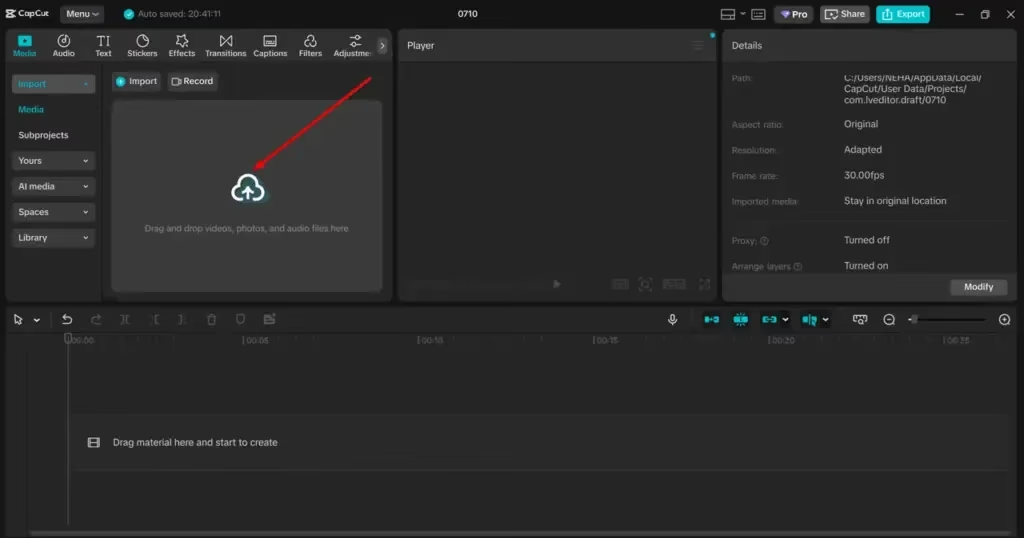
- Import your video – Drag your silent footage into the timeline. Quick as that.
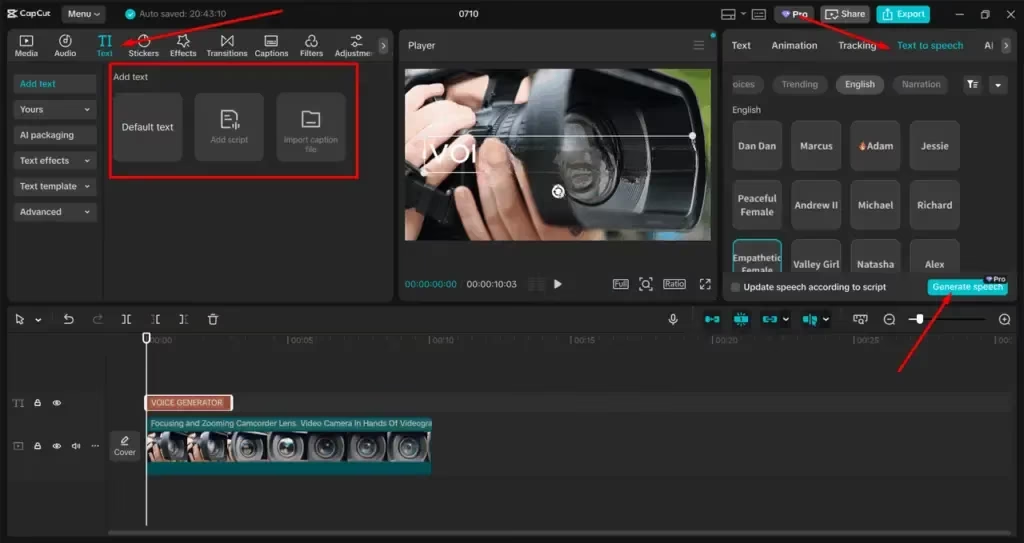
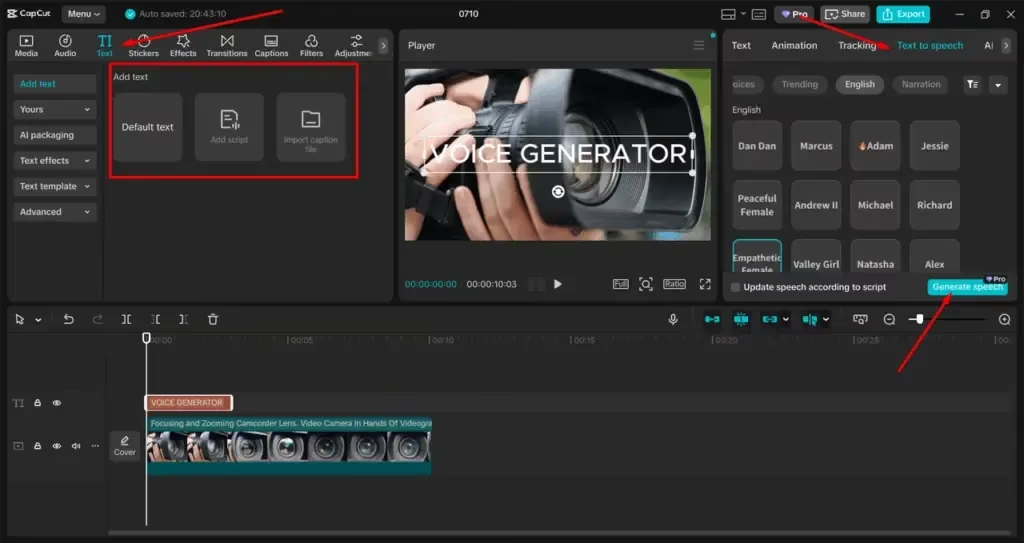
- Summon the AI voice – Head to the “Text” menu, drop in your script, then hit “Text to Speech.” Browse the voice roster (I’m partial to the storyteller bass), tweak speed, and click “Generate.” Watch the magic ripple across the audio track.
- Export and shine – Once the voiceover syncs perfectly, export your polished file. That’s it—you’ve just leveled up without a single recording session.
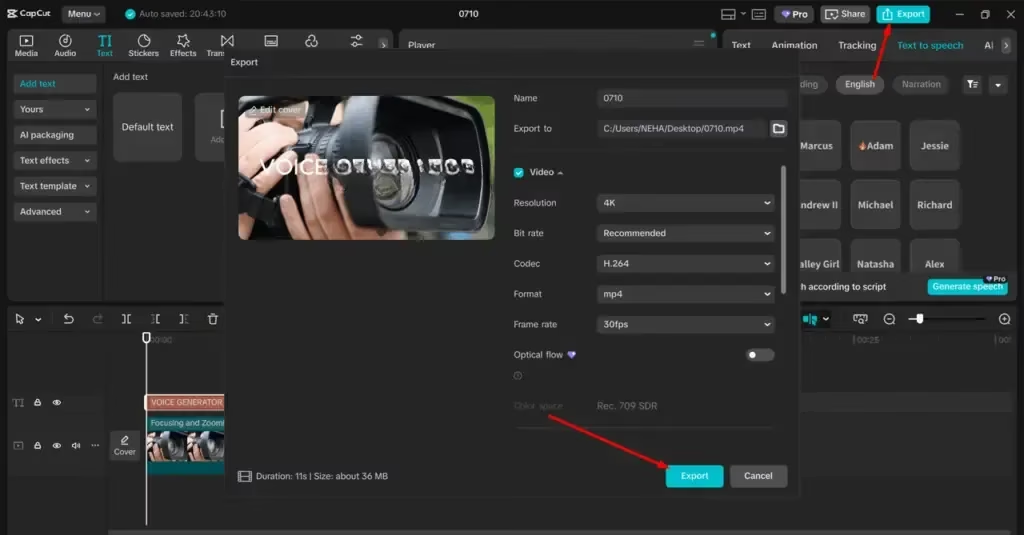
The whole flow takes less than ten minutes. I sometimes let the AI generate alternative reads just to see which nuance lands better, and it costs me nothing but a couple of clicks.

The Takeaway
AI voice generators are no longer a futuristic gimmick; in 2026, they’re the backbone of efficient, inclusive storytelling. They’ve given me speed, saved my wallet, and let me speak to the world without stammering. If you’ve been on the fence, consider this your sign to jump in. Grab a script, open your editor, and let the AI do the talking. You might just wonder how you ever survived the old way. And between you and me, that’s the best kind of upgrade—the kind that feels like cheating, but isn’t.
Data referenced from Newzoo helps frame why AI voice generators have become such a practical “always-on” upgrade for video creators in 2026: as gaming and entertainment audiences fragment across regions and platforms, the ability to rapidly localize narration, maintain consistent brand voice, and iterate variations quickly aligns with the broader market push toward scalable, multilingual content pipelines.